
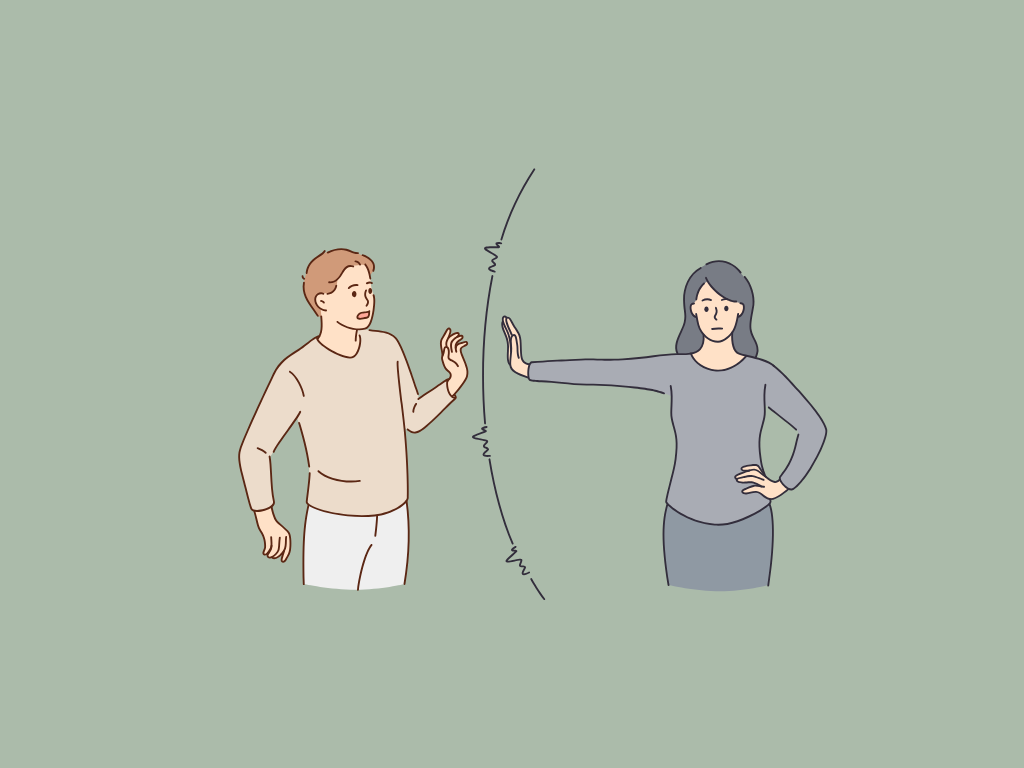

‘Tis the Season for Boundaries: A Look into Boundary Setting over the Holidays
Let’s be honest… the holidays can be a lot, even if there are parts that you genuinely enjoy. All of a sudden there are more plans, more family time, and a quiet pressure to show up and say “yes” so everyone stays happy and no one feels disappointed.
This is also the time of year when I hear clients wrestling with boundaries, asking questions like: “Is it selfish to set limits?” or “Why does needing space make me feel so guilty?” I share this because if you are having these same struggles, I want you to know that you are not alone.
A Personal Note
For a long time, I was the classic people-pleasing, “I will do anything to keep the peace” daughter, and the holidays were when that part of me kicked into overdrive. I would travel wherever I was expected to be, show up with whatever dish was requested (pies, cakes, bread… if someone wanted it, I baked it), and at gatherings I would answer every question, even the ones that felt intrusive or exhausting. I honestly believed that this was what love was supposed to look like, and I didn’t really stop to question it.
Over time, though, I started to notice the cost. Yes, everyone around me seemed happy, but I was quietly becoming drained, resentful, and more disconnected from myself each year. That was the turning point for me: realizing that I couldn’t keep showing up for everyone else while abandoning my own needs. My growth came from this reflection, and the realization that I didn’t need to stop loving people, I just needed to start setting boundaries to include myself in the equation, so I could find balance.
What are boundaries?
Boundaries are basically your inner yes-and-no system. They help you notice where your needs, values, and limits live, and where someone else’s begin. They shape what you have space for, what you don’t, and what you need to keep yourself well. That can include your time, energy, emotions, physical space, money, privacy, beliefs, and the way you want to be spoken to.
Another way to put it: boundaries stop your life from being run by other people’s expectations. When you know your limits, you don’t have to keep guessing what’s okay or stretching yourself thin to keep up.
Common Myths About Boundaries
Myth #1: “If a relationship is healthy, it shouldn’t need boundaries.”
Many people assume good relationships should just “work” without limits. In reality, clear boundaries reduce repeated hurt, confusion, and overgiving. They often strengthen trust because people know what is okay for you.
Myth #2: “A boundary is something I set to make the other person change.”
A lot of people assume that setting a boundary means asking someone else to change. In reality, that’s a request. A boundary is about what you will do to take care of yourself, no matter how the other person responds. That shift matters because it puts your wellbeing back in your hands and focuses on what you can control.
Myth #3: “I only need to set boundaries when I am upset.”
Boundaries are not just a reaction to conflict. They are preventative. They help you protect your energy before you reach the breaking point.
Myth #4: “Setting boundaries automatically creates confrontation.”
Most boundaries are simple, kind, and low-drama and can sound like:
- “Thank you for thinking of me, but that doesn’t work for me today.”
- “I’m glad you asked, but I’m not available for that this time.”
- “Let me think about it. I need some time before we talk more.”
How Boundaries Support You
When boundaries are in place, people usually feel calmer and clearer. There is less mental back-and-forth, less pressure to justify yourself, and more ease in knowing where you stand. Boundaries also free up energy for what matters most. When you say no to what drains you, you make room for what you actually want. Over time, boundaries model that care and limits can exist together, even if it feels uncomfortable at first.
Also, it is important to note that boundaries are not only about relationships. They are also about nervous system health. When boundaries are too soft, your body often lets you know through fatigue, irritability, sleep trouble, anxiety, or that numb feeling of being “on” all the time while running on empty. On the flip side, when boundaries are too rigid, you might feel safer, but also more disconnected or isolated. The goal is flexible boundaries that are clear and steady. If you keep noticing burnout, resentment, or dread before certain interactions, treat that as meaningful information. Those signals are often your mind and body telling you a boundary is needed.
Why boundaries feel harder during the holidays (and how to make them easier)
For a lot of people, the holidays come with a whole set of invisible scripts: “It’s only once a year,” “We’ve always done it this way,” “Just push through.”. When these messages are running in the background, saying no can start to feel selfish, even when your body is already exhausted.
If you grew up people-pleasing (like I did), you may also have learned that having needs makes you “difficult,” or that setting limits hurts other people. So, even small boundaries can bring up guilt, anxiety, or that familiar fear of disappointing someone. But here’s the truth: never saying no doesn’t protect relationships from conflict, it usually just postpones it and adds resentment and burnout along the way because people can’t respect limits they don’t know exist.
That’s why this season is a great time to practice simple, flexible boundaries in the places that tend to pressure us most:
- Invitations:
A short no is still a complete answer.
“Thanks for thinking of me, however I am not available this time.” - Hosting expectations:
You don’t have to do it all to be loving.
“I’m happy to host if it’s a potluck, however I don’t have capacity to cater.” - Gifting and money pressure:
Relationships don’t have to be measured by spending.
“I’m keeping gifting simple this year,” or
“I’m not doing exchanges, but I would really love to spend time together.” - Food, body comments, and hot-button beliefs:
You’re allowed to opt out of conversations that drain you.
“I don’t discuss bodies or diets,” or
“I disagree, and I am not debating this right now.”
(And if it continues, please know that it is okay to step away). - Traditions and travel:
Traditions are allowed to evolve as your life changes.
“We’re having a quiet morning at home and we will come by later,” or
“I am not traveling this year, but I would love to connect by video.” - Digital boundaries:
Constant access isn’t the same as constant availability.
Maybe you check group chats once a day, or mute them after a certain time. - Emotional overload in conversations:
Pausing is a boundary that protects everyone.
“I am getting overwhelmed, I need an hour before we continue.”
Following through is the key. Consistency is what makes boundaries feel real and builds trust over time.
Final thoughts
Holiday boundaries do not need to be harsh or dramatic. They only need to be clear enough to protect your energy and gentle enough to help you stay connected without losing yourself in the process. It can also help to remember that healthy boundaries are flexible, not rigid. They are not permanent walls, and they are not an all-or-nothing test of love. They shift with your capacity, the situation, and what matters most to you. If you notice yourself swinging between overgiving and shutting down, take that as a cue to aim for the middle ground: limits that are clear, kind, and consistent, and that honor both your needs and the relationship.
If you are looking for support over the holidays, or in the new year, please know that we are here when you are ready.
Happy holidays from the Serebro Health team 🙂
References
Boundaries. (2025, November 3). Psychology Today. https://www.psychologytoday.com/us/basics/boundaries
Chernata, T. (2024). Personal boundaries: Definition, role, and impact on mental health. Personality and Environmental Issues, 3(1), 24–30. https://doi.org/10.31652/2786-6033-2024-3(1)-24-30
Magee, H. (2024, June 4). Setting boundaries with others. The Gottman Institute. https://www.gottman.com/blog/setting-boundaries-with-others/
Yoon, Y. (2023, December 4). Navigating relationships: The power of healthy boundaries. Psychology Today. https://www.psychologytoday.com/ca/blog/on-second-thought/202311/navigating-relationships-the-power-of-healthy-boundaries

.png)