
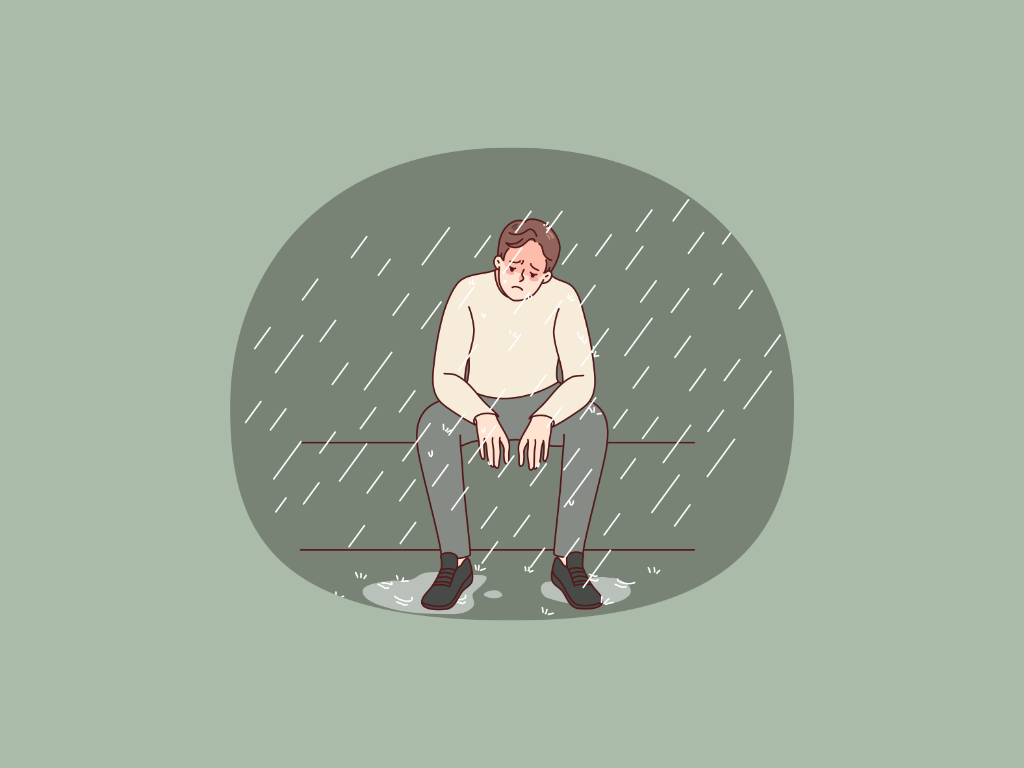

Understanding grief is often the first step (as we learned about in our previous blog on this topic), because it can help put language to what you are experiencing. However, just because we know what grief is, it doesn’t always make living with it any easier and because of this for many people, the next part of the journey involves learning how to live alongside their loss.
Grief isn’t something the mind simply moves past or leaves behind. It settles into the whole body and nervous system, shaping emotions, energy, and even how the world feels day to day. Grief asks for time and patience, often softening through connection, support, and a slow, steady re-entry into life rather than through effort or explanation alone.
Healing doesn’t mean erasing what was lost or leaving it behind. It involves allowing the loss to take its place within your inner world, without overtaking everything else. Over time, this can make room for living again, still carrying what matters, while gradually reconnecting with the parts of life that continue to hold meaning.
Why Support Matters More Than We Realize
Grief can feel so deeply personal and unique that it often leads people to pull inward. It can feel isolating, even when connection is what’s most needed. While each person’s experience of loss is their own, trying to carry it alone can make the grieving process feel heavier and more overwhelming. When someone is willing to simply be with us, to sit in a quiet, steady way without trying to fix or rush anything, the nervous system can begin to settle. Through that kind of presence and connection, emotions soften, the intensity eases, and the body gradually moves out of shock toward a place that feels more manageable.
Support can look like:
- a friend who simply sits with you without rushing your pain
- a family member who shows up even if they do not know what to say
- a counsellor who understands that grief needs witnessing, not fixing
When grief is shared, even silently, the overwhelming sense of existential aloneness starts to loosen. You are still grieving, but now the grief is held, not swallowed whole.
Letting Yourself Move Between Grief and Life
There are times when we face the pain directly and times when we shift toward rest, distraction, or ordinary tasks. This movement is not avoidance. It is the nervous system protecting itself.
In practice, this might look like:
- spending an hour looking through photos, then taking a walk
- crying when memories come up, then watching something light
- talking about the loss when you can, and tending to daily life when you need
This back and forth allows the reality of the loss to settle in slowly instead of crashing over you all at once. The pain becomes something your body can process in small, manageable amounts instead of a constant state of overwhelm.
When Thoughts Won’t Let Go
Grief has a way of looping in the mind. You may find yourself replaying the loss, imagining different endings, or returning again and again to moments filled with guilt or unanswered questions. This kind of mental replay can deepen pain because rumination is not the same as remembering. Remembering allows meaning to form. Rumination traps the mind in repetition, turning grief into an internal battle with no resolution.
At the same time, many people cope by pushing reminders away. Avoidance can feel protective at first, offering a break from overwhelming emotion. But when avoidance fully takes over, healing can slow. If the mind never encounters reminders of the loss, it doesn’t get the chance to update its sense of safety or reality. Everything stays frozen in the moment of impact.
A gentler path often helps. Rather than forcing yourself into painful situations or shutting everything out, small, intentional steps can make a difference. This might look like entering a room you’ve avoided for a few minutes, or allowing a brief conversation about the person when it feels safe enough. In these manageable doses, the nervous system begins to learn that the memory can be held without causing harm. Over time, the grip loosens.
Feeling Without Being Consumed
For some, grief feels sharp and relentless, as if longing and sorrow never ease. For many others, however, grief slowly shifts shape. This change doesn’t happen because love disappears. It happens because the nervous system gradually makes room for both the loss and ongoing life.
Emotion is part of this process, but rest from emotion is just as essential. Grief asks a lot of the body. Feeling deeply is metabolically demanding, and recovery matters. That recovery can take many forms:
- sleep
- moments of lightness
- ordinary routines
- connection that offers brief relief
None of these diminish the bond that was lost. They simply allow the system to recalibrate before the next wave of feeling arrives.
When Grief Needs More Support
Sometimes, this natural adjustment doesn’t happen. Instead of softening, grief remains front and center, disrupting daily life and sense of self. In these situations, support is not about letting go of the person who died. It’s about helping the system restart a healing rhythm that has stalled.
Helpful approaches tend to focus on:
- easing repetitive, painful thought loops
- reducing patterns of complete avoidance
- strengthening emotional regulation
- re-engaging with both mourning and everyday living
The intention is not to eliminate grief, but to help it find a place where it can coexist with life rather than overwhelm it.
A Different Way Forward
Healing from grief does not mean moving on or forgetting what you lost. It is about discovering how to live alongside the loss. For many people, this process involves slowly making space around grief, rather than trying to avoid it, so it no longer overwhelms everything else. This can take shape in ways like:
- staying connected to others even when isolation feels easier
- allowing yourself to feel emotions in small, manageable amounts instead of pushing them away or letting them overwhelm you
- gently approaching reminders of your loss, at your own pace, rather than shutting them out forever
- learning to notice when your thoughts become stuck in painful loops, replaying the same moments over and over, and gently redirecting them when possible
- allowing moments of relief, curiosity, or even joy to return without guilt, understanding that feeling okay for a moment does not diminish what or who you loved
As you begin to live with your grief in small, manageable ways, you may realize that the loss starts to feel a little less overwhelming. You may notice that your body and mind slowly begin to take in what has happened. You may discover that nothing about your loss needs to disappear for this shift to occur. What or who you have lost can remain part of your memories, your sense of self, and the meaning you carry forward.
Over time, you may find that it becomes easier to turn toward parts of life that still matter to you, without feeling as though grief will take over. You may begin to see that living with grief often means learning how to hold both sorrow and life at the same time. With care, support, and time, you may experience moments where things feel more balanced, arriving gently, gradually, and in ways that feel possible rather than forced.
References
Aeschlimann, A., Heim, E., Killikelly, C., Arafa, M., & Maercker, A. (2024). Culturally sensitive grief treatment and support: A scoping review. Social Science & Medicine – Mental Health, 4, 100325. https://doi.org/10.1016/j.ssmmh.2024.100325
Shear, M. K. (2012). Grief and mourning gone awry: Pathway and course of complicated grief. Dialogues in Clinical Neuroscience, 14(2), 119–128. https://doi.org/10.31887/DCNS.2012.14.2/mshear


.png)