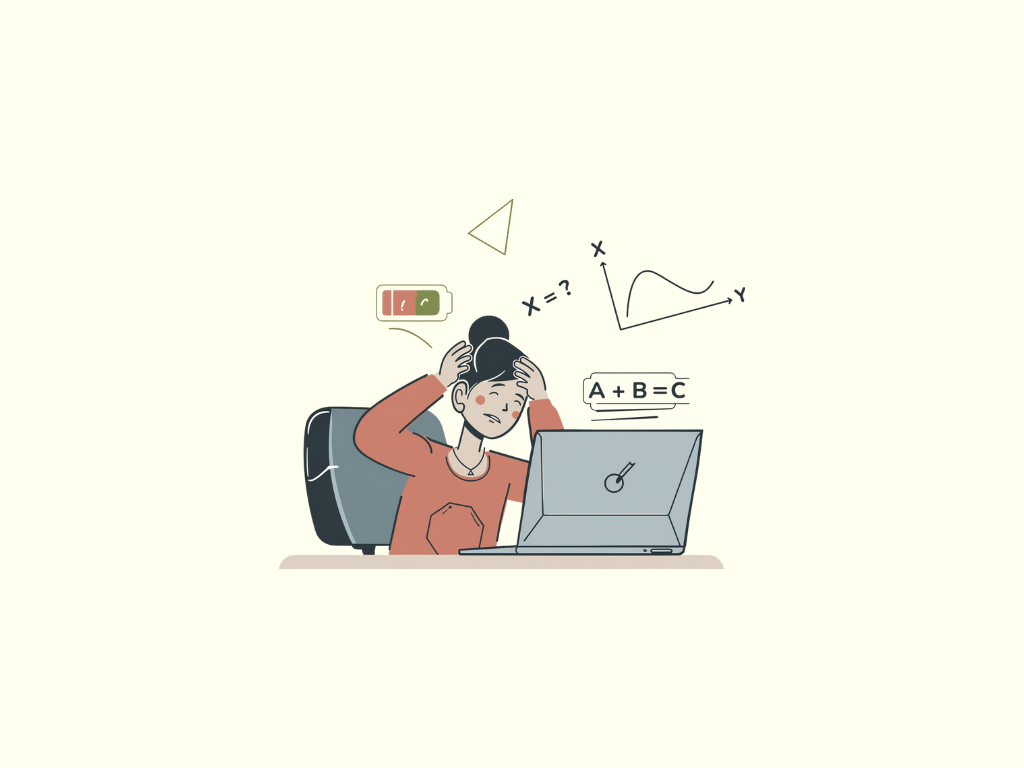


What Is Rumination?
Rumination is a pattern of repetitive, negative thinking where the mind gets stuck replaying distressing events, analyzing mistakes, or dwelling on uncomfortable emotions. It is different from healthy reflection or problem-solving. In reflection, there is movement toward insight or resolution. In rumination, the mind circles the same material without forward progress.
Research describes rumination as passively and repetitively focusing on distress, its causes, and its consequences. Instead of asking, What can I do now?, rumination asks, Why did this happen? What does this say about me? What if this happens again?
Importantly, rumination is not a diagnosis. It is a cognitive process. It commonly appears in anxiety, depression, trauma-related disorders, and obsessive patterns, but it can also happen to anyone under stress.
Normalizing Automatic Negative Thoughts
Automatic negative thoughts are part of being human. Our brains are wired to scan for threat, remember painful experiences, and anticipate risk. Under stress, fatigue, social pressure, or uncertainty, negative thinking increases.
Research highlights that these thoughts are often distorted. Common distortions include:
- All-or-nothing thinking
- Disqualifying the positive
- Mental filtering (focusing on one negative detail)
- Overgeneralizing from one mistake
- Catastrophic thinking
These distortions can lower confidence, increase anxiety, and drive avoidance, but having them does not mean something is wrong with you. It means your brain is trying to protect you.
I also want to normalize this further by saying that I have struggled with rumination myself, and even with the knowledge of all of the coping strategies I can leverage, I still catch myself doing it at times. I might replay a conversation, question a decision, or imagine worst-case outcomes. What brings me back is remembering that it does not feel helpful. When I pause and notice the impact, I feel more tense, more self-critical, and less grounded. That awareness becomes my cue to apply strategies that support me instead of staying stuck in the loop.
Why Rumination Feels So Hard to Stop
Research shows that rumination and negative mood fuel one another. The more someone ruminates, the worse they feel. The worse they feel, the more their mind searches for negative material. It becomes a self-perpetuating cycle.
Rumination can also:
- Activate negatively biased memories
- Increase hopeless interpretations of current events
- Reduce motivation
- Impair problem-solving
- Disrupt sleep
- Increase physiological stress
Interestingly, rumination often feels like it is doing something useful, and because of this, when I work with clients, I often ask:
What is this thought process doing for you?
In this exploration, we frequently discover that rumination can feel protective. It may create the illusion of control. For example, many clients feel that if they think about their concern long enough, they might be able to prevent it from happening again. Another way rumination tends to show up is it may function as self-punishment to avoid future mistakes, it might feel safer to expect the worst than to be disappointed, or it may simply feel familiar.
Understanding this protective role is crucial. If rumination has been serving a function, even an outdated one, we cannot just remove it without offering healthier alternatives.
You Are Not Alone: What I See in My Practice
Many clients come to me struggling with automatic negative thoughts. This is one of the most common themes in therapy. People often believe they are alone in this pattern, but they are not.
In our work together, we explore:
- The triggers that activate the thought
- The root beliefs underneath it
- How the thought shows up in the body
- What the mind is saying
- What emotional and behavioural consequences follow
Another way that we explore ruminations and the patterns associated with them is by using the ABC model below, we were explore:
- A is the activating event
- B is the belief
- C is the emotional and behavioural consequence
What clients typically learn in exploring this is that often, it is not the event itself that creates distress, but the belief about the event. When we shift the belief, the emotional and behavioural outcomes begin to shift as well.
What the Research Tells Us About Managing Rumination
There is a concept that deeply resonated with me when I first heard Olympic athlete Eileen Gu speak about mindset and neuroplasticity. She described how the brain strengthens whatever it repeatedly practices; that thoughts are not just fleeting experiences, but patterns that become wired through repetition. In essence, the more we practice a mental pathway, the stronger it becomes.
When I heard this, it immediately clicked. It is both simple and profoundly true.
If we repeatedly rehearse fear, self-criticism, or worst-case scenarios, those neural pathways become more automatic…but the same principle applies in the opposite direction.
With intentional practice: redirecting attention, challenging distortions, cultivating balanced thoughts, we can literally strengthen different pathways. This is the science of neuroplasticity, and it offers hope: we are not stuck with our current thought patterns. They can be reshaped.
Elaborating on this, research shows that resisting negative thoughts often makes them stronger. More specifically: fighting them intensifies them; acceptance reduces their power.
Another key insight is that you cannot eliminate negative thoughts entirely, but you can change your response to them. There is a space between stimulus and response. In that space lies choice.
Studies comparing interventions found that brief distraction and brief mindfulness were effective in reducing rumination in the moment. Problem-solving, surprisingly, was not effective when someone was actively ruminating. This suggests an important sequence:
- First interrupt the loop.
- Then regulate the nervous system.
- Then engage in problem-solving once calm.
Practical Strategies for Breaking the Cycle
1. Interrupt Before You Analyze
When caught in rumination, the first goal is not deep insight. It is an interruption.
Brief distraction can help shift attention away from the loop. Mindfulness can help anchor attention to the present moment.
Both strategies reduce the intensity of rumination by redirecting attention.
2. Create Distance from the Thought
Instead of saying I am not good enough, try saying:
“I am having the thought that I am not good enough”.
This small shift creates separation between you and the thought. Thoughts are mental events, not facts.
3. Practice Cognitive Restructuring
Once regulated, you can gently challenge the thought:
- What is the evidence for this?
- What is the evidence against it?
- Is there another explanation?
- What would I say to a friend in this situation?
Replace the thought with a balanced alternative, not extreme positivity. For example:
“Not everyone will judge me”.
“I can feel nervous and still speak up”.
Research shows that when belief in negative thoughts decreases, behaviour shifts as well.
4. Engage the Body
Rumination is not just mental. It shows up physically.
Notice your breath.
Notice tension.
Ground yourself in sensory detail.
Even small physical regulation strategies can disrupt the cognitive loop.
5. Build Small Positive Moments
Resilience research shows that resilient individuals experience stress too. What differentiates them is their ability to notice small positive moments; kindness, gratitude, connection.
These uplifts buffer against emotional depletion.
Key Takeaways
In summary, rumination is a repetitive cycle of negative thinking where the mind gets stuck replaying distress without moving toward resolution. Negative automatic thoughts are inevitable and part of being human, but they are not facts. When we ruminate, distress intensifies rather than resolves.
Managing rumination requires awareness, self-compassion, intentional interruption, mindful distance from the thought, and gradual cognitive shifts. The goal is not to eliminate negative thinking, but to change your relationship with it so you are not stuck in the loop.
If you are experiencing this right now, you are not alone. Many people struggle with negative thought cycles. With practice, it is possible to pause, notice, redirect, and respond more intentionally. That is the work, not eliminating negative thoughts, but learning not to stay stuck in them.
If you find yourself stuck in cycles of rumination or negative thinking, you do not have to navigate it alone. Serebro Health offers workshops and therapy to help you understand your thought patterns, challenge your inner critic, and build a healthier relationship with your mind. Reach out today to take the first step
References
Cpt, S. C. (2022, February 7). Can’t Help Thinking About the Past? 3 Tips to Stop Ruminating. Psych Central. https://psychcentral.com/blog/how-to-stop-ruminating-on-the-past#do-you-need-help
Hilt, L. M., & Pollak, S. D. (2012). Getting out of rumination: Comparison of three brief interventions in a sample of youth. Journal of Abnormal Child Psychology, 40(7), 1157–1165. https://doi.org/10.1007/s10802-012-9638-3
Kelly, J. D., IV. (2019). Your best life: Managing negative thoughts—The choice is yours. Clinical Orthopaedics and Related Research, 477(6), 1291–1293. https://doi.org/10.1097/CORR.0000000000000791
Muthmainnah Takdir, A., Darusman, M. R., & Devi, D. F. (2025). Transforming negative thoughts into self-confidence: The impact of cognitive restructuring on adolescents. Journal of Psychological Perspective, 7, 19–28. https://doi.org/10.47679/jopp.719982025
Rumination: a cycle of negative thinking. (n.d.). https://www.psychiatry.org/news-room/apa-blogs/rumination-a-cycle-of-negative-thinking