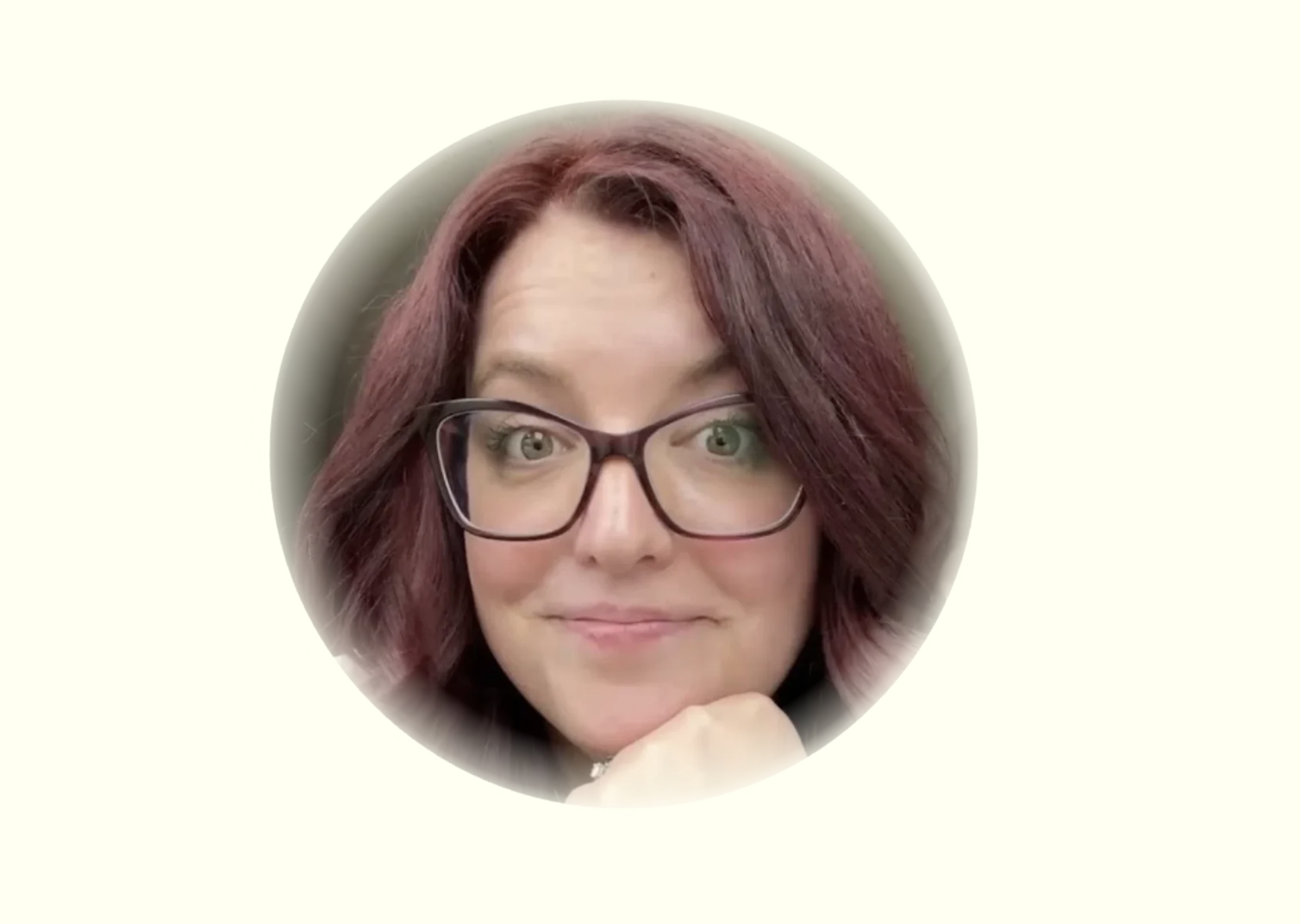

Welcome to a new series here at Serebro Health called Behind the Practice, where you will get to know the people behind the clinic. It felt right to kick things off with me, Alisa, as I am the founder and Clinic Director here at Serebro Health. I started this practice with my husband Giovanni back in 2022, and I still see clients myself alongside running the clinic. Here is a bit more about who I am, both in and out of the therapy room.
1. Getting to know you
What first drew you to the field of mental health and therapy?
I have always been drawn to the idea of self care, and that pull started to take shape back in teacher's college. I remember learning that we cannot really learn when we are in a state of panic, or when we are anxious or stressed, and that stuck with me. It felt so important to help students feel more at ease before we could even get to the actual lesson. Once I started teaching, I found myself having a lot of circle time and one on one conversations with students about mental health and growth mindset, and I loved that part of my day so much more than teaching the subjects themselves. That was really the moment I thought it is time to switch careers and go deeper into this.
I would be remiss if I did not mention my husband's career had a part to play in it too. As a military spouse, you move around a lot, and as a teacher, every move meant jumping through hoops to get my qualifications transferred and starting from zero at a new school board. Financially and practically, I was not able to build my career the way colleagues who stayed in one board for years could. So it was really a combination of two things pulling me toward this field. Part of it was genuine interest in the topic, and part of it was the practical push of being a military spouse.
You started out as a classroom teacher. What made you pivot into this work?
A lot of it is answered above! But I will add that I saw so much burnout among fellow teachers, and I wanted to understand more deeply what was causing it and how to actually fix it. I also knew what it felt like to put everyone else's needs ahead of my own, and that curiosity about burnout, both mine and the people around me, pulled me toward this work.
Outside of therapy, what do you love doing?
I love researching, as long as the topic is genuinely interesting to me, whether that is watching videos, reading, or going down a rabbit hole online. I love gardening and traveling, gentle movement like Pilates or yoga, and creating beautiful spaces, whether that is arranging a bouquet, cooking, or baking. I am also a big fan of self care in the classic sense, a good bath, trying out a new face mask routine, or grabbing coffee with a friend and browsing the aisles at Winners or Walmart just to see what is new.
What's something that keeps you grounded on hard days?
Having systems and routines in place really helps and going back to basics. After a hard day, I love getting cozy on the couch under a blanket with a hot drink and watching a feel-good show or movie like Friends or Big Bang Theory. I have a love hate relationship with cleaning and organizing, I hate starting it but I love the feeling once it is done. My husband keeps me grounded too. I love talking things through with him on a walk or a drive until we are completely chatted out. Meditation, whether that looks like prayer or a guided practice, and movement in general also help me reconnect with myself and stay grounded.
2. Approach to the work
What is your favourite modality to work with, and why?
I lean on a person centred, Positive Psychology approach, but more recently I have started working a lot more with somatic therapy, understanding how the nervous system impacts the way we react to things. It is what is called a bottom up approach, and it is so useful when someone is already in a state of panic or freezing. It helps get them out of that state first, so we can then move into top down approaches like CBT or Narrative Therapy.
I love Narrative Therapy, along with Dialectical Behaviour Therapy and Internal Family Systems. What I love about DBT is the emotional regulation piece, we are essentially building a toolkit together for difficult moments. IFS has become one of my favourite modalities to work in. There is something incredible about helping a client understand the different parts they carry, how those parts blend with them, and how they influence their decisions and reactions. Narrative Therapy, on the other hand, is fantastic for helping someone understand who they are and what they have gone through, especially when processing past trauma. Instead of reliving something over and over, the story becomes more like a book you can open, read through, and put back on the shelf. It stays part of you, but it becomes so much more manageable. All of these modalities really come down to giving clients the tools and understanding of how to help themselves.
What's your philosophy on therapy and what do you want clients to feel or know?
First, you do not need to have it all figured out before you sit down with me. You can just come in and say, I am feeling overwhelmed, and we will unpack it together. I love those moments of helping a client see, oh, this and this is contributing to my anxiety or my burnout.
My philosophy is that you are the expert on your own life, and I am the expert on the therapy side of things, the interventions and the strategies. Together we get you where you want to go. I am here to help you navigate the difficult situations, but you are the one who takes the steps. I have seen the most progress in clients who take what we talk about in session and actually apply it to their life, though of course that depends on someone's readiness and capacity at the time.
My goal from day one with any client is to help them get to a place where they no longer need therapy. We unpack what has been weighing on them and equip them with tools and strategies so they can keep going on their own. A lot of what helps our mental and physical health is honestly pretty mundane advice we have all heard before, eat better, sleep more, move your body, drink water. What I am here for is helping clients figure out what that actually looks like in their real life, so they are not left googling it or trying to piece it together alone. There is a quote I love, you can do anything yourself, but coaching gets you there faster. A lot of the people we work with are high achieving professionals or capable military families who could absolutely figure things out on their own eventually. Working with a therapist just gets them there faster.
What areas are you most passionate about, both in practice and in how you've built the clinic?
Anxiety, burnout, and ADHD, since these are things I have navigated myself and there are such practical, hands on tools that genuinely help. More broadly, I am passionate about supporting the people who have traditionally had to be tough and resilient without much support of their own, military families, caregivers, nurses, teachers, people caring for elderly parents or young kids, first responders. These are the people who carry so much and do it so well that they often go unnoticed.
Is there a population or issue you feel especially drawn to working with?
Really the same answer as above. Military families in particular, since some are juggling young kids, elderly parents, or both, on top of frequent moves and constant uncertainty. But it extends to anyone who carries a heavy load quietly and well.
What does a "good session" look like to you?
Honestly, there is more than one version of a good session for me. Sometimes it is a client leaving with one small thing that feels more manageable, that sigh of relief where they feel less alone and less, dare I say, crazy. Sometimes it is finding the holes in their thinking or in the strategies they are already using and helping to plug those holes, so they leave with a clearer sense of where to go next.
But at the end of the day, a good session is one where someone shows up even when they do not feel like it. Some of the deepest sessions happen when a client says, I do not know what to talk about today. That often means they have stabilized enough to go deeper, and as their therapist I can look back at areas I have noted for further exploration. We do that deeper work together and get to a place of real release or understanding. So it is not any one single thing, it really depends on where the client is that day.
3. Learning and influences
Who are some people in the mental health field you look up to?
Hands down, Brené Brown and her work on shame and belonging, it has helped me personally and shaped so much of my client work. Richard Schwartz is another huge one for me, his development of Internal Family Systems is part of why IFS has become such a favourite modality of mine, and his approach has this calm, almost spiritual quality to how he guides the work. More recently, I have also loved the work Sarah Baldwin has done blending somatic therapy and nervous system understanding with parts work.
Any favourite books (clinical or otherwise) that have shaped how you think about this work?
The Body Keeps the Score by Bessel van der Kolk is a big one, for understanding the connection between mind and body and how trauma lives in the body. I am also currently reading How to Keep House While Drowning by KC Davis, I love how she untangles the shame and morality wrapped up in care tasks and offers such practical strategies instead. How to ADHD by Jessica McCabe is another favourite, both the book and her YouTube channel, I love how she speaks from lived experience while also drawing on real research and interviews with leaders in the field, making it accessible for the average person with ADHD or anyone who loves someone with ADHD.
On the more philosophical side, I love books like The Untethered Soul by Michael A. Singer, Man's Search for Meaning by Viktor Frankl, and The Alchemist by Paulo Coelho. They all speak to that deeper connection to the soul, and I think a real lack of purpose and spiritual connection is a big part of why anxiety and depression have risen the way they have. And finally, for pure enjoyment, give me any book with a good adventure or detective story, nothing too gory or thriller heavy, but I do love a bit of dark humour. Anyone in the military community knows that dark humour tends to come with the territory.
What's something you deeply believe in as a clinic director that's shaped how you've built Serebro Health?
Many things guide how I have built Serebro Health, but a few stand out.
The first is a quote from Richard Branson, founder of Virgin, that has stuck with me: he has said that clients do not come first, employees do, and if you take care of your employees, they will take care of the clients. I believe that deeply. It shows up in how high our standards are, from a rigorous hiring and intake process, to how we take care of our team once they are here. Our therapists are paid a salary rather than per client, which means they can focus on the clients and on research and growth instead of worrying about billable hours. We cover supervision and ongoing training, and we provide health benefits. Financially, that has stretched us on the founder side more than people probably realize, but it has been so worth it.
The second is making the experience of working with us as seamless as possible for our clients. The people who reach out to us are usually already at capacity, so the last thing they need is more friction. That is part of why we have pioneered direct billing for psychotherapy, we were one of the first clinics to offer it across multiple insurance platforms, and as soon as a new platform makes it available, we are on it.
The third is education. As a former teacher, this is such a big part of who I am. That shows up as ongoing training for our staff and for myself, and it is also why we offer free workshops as part of what we do. It also means I try to never assume, whether that is with clients or with staff. I would rather lay out clear outlines and explain things fully than assume someone already knows how something works.
The other piece I live by is the importance of human to human connection. With my team, just like I used to do with my students, we check in with each other. We make sure people are okay emotionally before diving into the work, and I try to carry that same care into how I support my staff.
4. For the future client
What would you want someone to know before their first session with you?
Just come as you are. If something has been feeling off but you feel like you can carry it, you do not have to be totally broken before you come to therapy. Some of the best outcomes I have seen are with people who are capable, who already know a lot of strategies, but still come in and say, I know I am at my edge and I want to fix it before it gets worse. We are not a crisis centre, we are here to catch you before you get to that point and to help prevent you from ever getting there.
I also want people to know it does not mean you are weak or that you have failed. Think of it like an athlete who works with a coach to fine tune their game. We would never call that athlete incompetent for wanting support, and it is the same for you. Therapy is here to help you build real coping strategies for whatever life throws at you, while also helping you reconnect with your heart, your purpose, and yourself. It is also a safe, sacred space to unburden yourself without putting that weight on the people close to you, especially in situations where sharing everything with them may not be possible.
And if you are completely overwhelmed and have no idea where to even start, that is okay too. You do not need to know where to begin. You can just bring your heart and your pain. Figuring out what is causing it and how to work through it, that part is our job, not yours.
What's one thing you wish more people understood about therapy?
That it is not only for crisis moments. If you are in a caregiving profession, if you are a parent, if you serve in the military or as a first responder, the work asks so much of you. Without an outlet to process what is happening and how you feel about it, it accumulates slowly over time. Come in before it becomes a crisis, before you carry it for decades. Even those of us in psychotherapy see our own therapists regularly, as part of our own self care. It is actually part of why we offer a discount to fellow helping professionals, because we know how demanding that work is and we want to support you in carrying it.
If someone's nervous about starting therapy, what would you say to them?
That makes complete sense. There is still so much stigma around going to therapy. I would also say you are in good company here. So many of our clients at Serebro Health are in therapy for the first time, and we make sure the whole process is as comfortable as possible for you. Worst case, you find you do not vibe with your therapist. It is completely within your rights as a client to stop working with that therapist and find a different one, and if you feel comfortable, you can always bring it up first. At Serebro Health we try to check in with you, especially more often at the beginning when it might feel a little more awkward, to see how progress is going and whether there is anything you would like to change. Finding the right fit matters, so I always encourage people to try a free consult, or even a couple of consults with different therapists, whether at Serebro Health or elsewhere, until you find someone who feels right for you. And know this is not a lifetime commitment either. Some people stay with the same therapist for years, but I have personally found so much value in working with different therapists over time, since each one helps you discover something new about yourself.



.png)