
An Honest Conversation About Anxiety
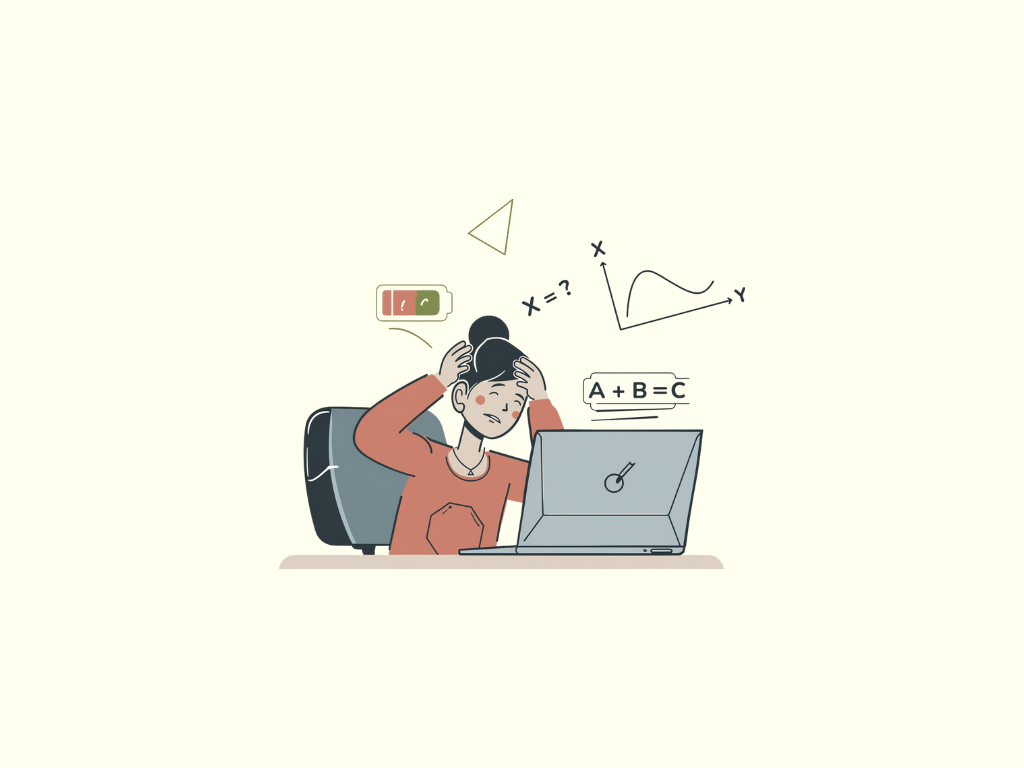
Many of the clients I work with are carrying anxiety. Not the passing nervousness before a big meeting or the flutter of excitement before something new, I am talking about the kind of anxiety that keeps you awake at night, and quietly shapes every decision you make. The kind that tells you that you are not doing enough, not good enough, or that something is about to go wrong even when everything looks fine on the surface.
I will be honest in sharing that I am not a stranger to these feelings of anxiety; it is one of the things that led me, personally, into burnout.
I spent years anxious about my work, how I showed up, whether I was saying the right thing, helping enough, being enough. That relentless inner noise eventually caught up with me, and it became impossible to ignore. It was only through doing my own work that I began to truly understand what anxiety really is, what it was doing inside my body, and how to meet it differently.
So many of my clients share stories that sound different on the surface but feel the same underneath. There is the people pleaser who can never say no, terrified of letting someone down or being seen as difficult. The high achiever who cannot enjoy their success for fear of the next failure is just around the corner. The person who replays conversations for days, convinced they said something wrong. The one who catastrophises health symptoms, relationships, or finances late at night when everything feels louder and more threatening. The parent who worries constantly about their children, their choices, their futures. The professional who keeps pushing through exhaustion, anxious that slowing down means falling behind. The one who struggles to make decisions, paralysed by the fear of choosing wrongly. The person who cannot switch off, even on holiday, even at the weekend, even in bed.
If any of these resonate, keep reading.
So, what is anxiety?
Generalized anxiety disorder, known as GAD, is characterised by persistent, excessive, and largely uncontrollable worry that spreads across many areas of life at once, including health, relationships, work, finances, and the future. Unlike stress, which is usually tied to a specific situation, GAD is more free-floating, because the worry tends to move.
For a clinical diagnosis, symptoms need to be present for at least six months and significantly interfere with daily functioning, however, many people tend to carry anxiety for years before they seek help, often normalizing it as just the way they are, not realising that relief is genuinely possible.
It is also important to highlight that anxiety is not a character flaw, or a weakness. At its core, it is your nervous system doing exactly what it was designed to do, which is to protect you from danger. Deep inside the brain, a structure called the amygdala acts as your alarm system, constantly scanning for threat. In people with anxiety, that alarm becomes hypersensitive. It begins to misread ambiguous situations as dangerous, fires when there is no real threat present, and struggles to return to baseline once activated. The result is a brain and body that are chronically braced, waiting for something to go wrong.
Why does anxiety show up?
Anxiety has many roots, and rarely does it come from just one place. Research points to genetics playing a significant role. For example, having a close family member with anxiety can increase your likelihood of developing it yourself, not because anxiety is inevitable, but because certain neurological predispositions are inherited. Key neurotransmitters in the brain, particularly GABA, serotonin, dopamine, and norepinephrine, are often dysregulated in people with GAD. GABA, which is the brain's primary calming chemical, is especially important. When GABA levels are low or not functioning properly, the brain finds it very difficult to shift out of a state of alertness and into rest. The amygdala, which governs fear and threat responses, becomes overactive, and the nervous system stays stuck in a high-alert state.
Beyond biology, life experiences matter enormously: chronic stress, early relational wounds, people-pleasing patterns learned in childhood, a culture that glorifies busyness, poor sleep, excessive social media use, and sustained pressure at work all contribute. Often it is a combination of many things accumulating quietly over time until the body can no longer absorb it.
How does anxiety actually feel?
GAD is not always the dramatic panic we see portrayed in movies, very often it is quieter and easier to dismiss. I often have clients describe it as a restlessness that they cannot shake, constant fatigue that sleep does not seem to fix, difficulty concentrating, or a mind that races with so many thoughts that focusing feels impossible, muscle tension that lives permanently in the neck, shoulders, or jaw. Other symptoms clients have described are physical symptoms like a racing heart, dry mouth, shallow breathing, dizziness, or nausea that can sometimes be mistaken for physical illness.
Research also highlights something important that many clients find validating. Anxiety and depression very frequently co-occur. Studies suggest that around 59% of people with GAD also meet the criteria for major depression. This means if you have been struggling with low mood alongside your worry, that is not unusual at all. The two are deeply interconnected, and addressing one often requires attending to both.
What can help?
The most effective approach in therapy is often one that addresses both the mind and the body together.
Cognitive behavioural therapy (CBT) is considered the gold standard psychological treatment for anxiety, with decades of research supporting its effectiveness. CBT works by helping you identify the specific thought patterns that are fuelling your anxiety, challenging the assumptions underneath them, and gradually building new ways of responding to worry. It helps you understand it, and then gently shift your relationship to it.
Alongside CBT, nervous system work is something I feel strongly about integrating into sessions where we are exploring anxiety. The reason for this is because anxiety lives in the body as much as it lives in the mind. Techniques like breathwork, grounding practices, and gentle movement all work directly with the nervous system to interrupt the stress response and create a physiological sense of safety. When your nervous system feels safe, your mind follows.
Applied relaxation therapy, which teaches you to recognize the very early warning signs of anxiety in your body and use relaxation skills to interrupt the cycle before it escalates, is another well-researched approach. Mindfulness practices, social connection, and addressing sleep consistently have all shown meaningful benefits in the research literature. For some people, medication, particularly SSRIs, plays an important role in creating enough stability to engage fully in therapeutic work. If you feel you may need this support, reaching out to your doctor to explore further may be beneficial.
Who can help?
We can 🙂…if you have been reading this and quietly recognizing yourself, I want you to know that what you are experiencing is more common than you might imagine, and it is something that can genuinely change with the right help. We are here when you are ready.

References
Mishra, A. K., & Varma, A. R. (2023). A comprehensive review of the generalized anxiety disorder. *Cureus*, *15*(9), e46115. https://doi.org/10.7759/cureus.46115
Tyrer, P., & Baldwin, D. (2006). Generalised anxiety disorder. The Lancet, 368(9553), 2156-2166.