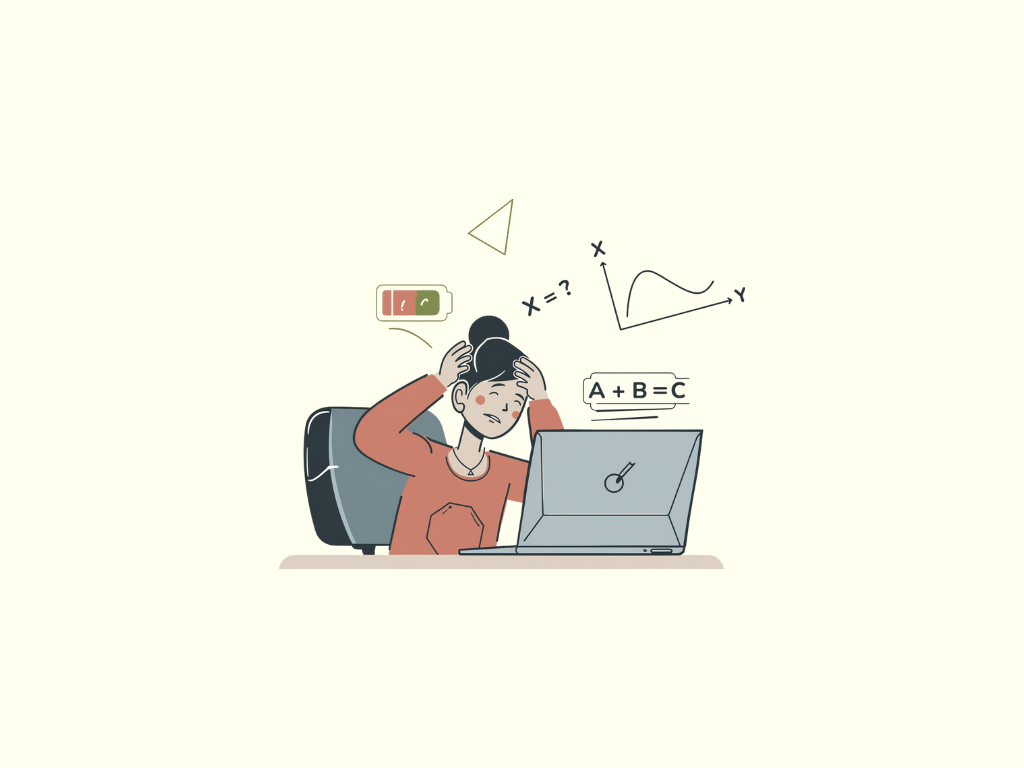

"You're so resilient!" "I don't know how she does it all." "He's the strong, silent type."
These are things our clients hear a lot, and in part, it's true. Our clients are the resilient ones, at least from the outside looking in. The one everyone else relies on, whether by choice or by necessity.
Whether you've been complimented on your resilience, or you're in the thick of it right now trying to build some, welcome. Researchers still argue over the exact definition of resilience, whether it's a fixed trait, an ongoing process, or something you can only really see in hindsight (Molina-García et al., 2021, as cited in Copley, 2025). We're not going to solve that debate here. What we do know, across every definition, is that resilience means staying oriented toward who you are while things around you shift, recovering, adapting, and often coming out with a steadier sense of direction than before (Sisto et al., 2019).
Military families in particular have to be especially resilient, living in a constant state of readiness. Hurry up and wait one day, a deployment or a two-week posting notice the next. And it's not only military families who know this. Life ambushes all of us eventually; military families just tend to experience it more frequently.
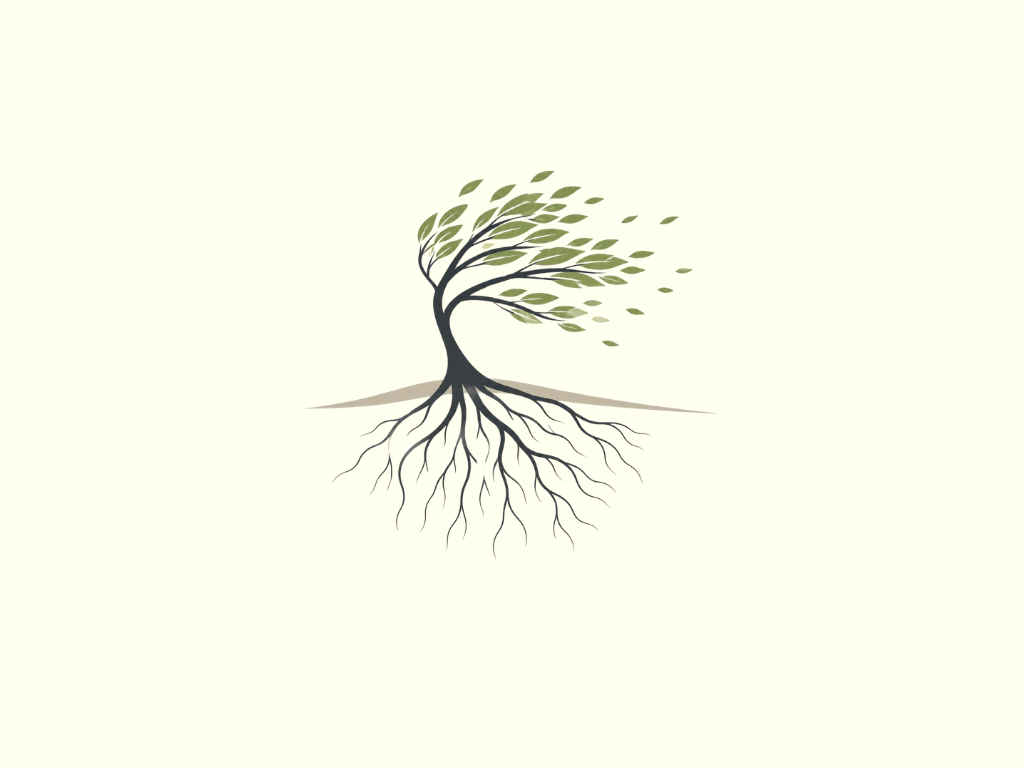
Posting season just wrapped. Kids are back in school, in a new school board or the same one, but with a parent settling into a new unit or a new job alongside them. There's one image that keeps showing up as a symbol of resilience, drawn from years of sitting with military spouses, caregivers, and service members: the tree. Rooted enough to hold steady, flexible enough not to snap. Let's look at what that actually means, and what the research says about why it works.
The Flexible Branches: Bending Through Posting Season
A tree that stood completely rigid in high wind would snap. It's the sway, the give, that keeps it standing. Posting season asks the same thing of a family. New house, new base, sometimes a new country, all while trying to keep some thread of normal going for the kids. Families who hold too rigid a shape through that, insisting everything look and feel like it did before the move, tend to find the cracks faster than families who let the shape change for a season.
In a study following soldiers home from deployment, the ones who could regulate their emotions, behaviour, and thinking through the transition did better. They showed less distress and higher self-perceived effectiveness, even after accounting for personality (McLarnon et al., 2021). That's the bend in action, the actual, measurable capacity to give under pressure instead of breaking. In practice, that might look like ordering takeout for the third night in a row and letting the kids zone out on video games while you get the boxes unpacked, not because you've let go of the reins, but because you've consciously decided what matters this week and what can wait.
Where in your life right now are you holding so rigidly that something's at risk of snapping?
Deep Roots: What Holds You Steady
Before a tree grows a single branch, it grows down. Deep roots are the values, the family history, the past hard seasons you've already gotten through, the things that stay constant no matter which base, which house, which school you're standing in this year. They're what keeps you upright even when nothing on the surface looks familiar.
This is part of why looking back matters so much. Actually reflecting on how you got through the last posting, the last deployment, the last hard first month somewhere new, and naming what carried you, turns lived experience into something you can draw on again, rather than just a memory that happened to you (Mayo Clinic, n.d.). People who can point to a "why," even a small one, tend to report higher resilience than people who can't (Molina-García et al., 2021, as cited in Copley, 2025). That "why" is a deep root. It's the same moment you find in every good story: someone loses themselves under pressure and needs reminding of exactly who they are. The reminder doesn't create something new; it just brings back into view what was already there.
Who are you when everything else is in motion? What's stayed constant about you, no matter which base, which house, which season you're standing in this year?
Root Network: Finding Your People After the Move
A tree can grow perfectly well on its own. But one connected to others nearby is measurably less vulnerable. Underground, trees share nutrients and send warning signals through fungal networks connecting their root systems to each other. The most resilient military families tend to build that same kind of network for themselves, on purpose, wherever they land.
Back-to-school season after a move is often the loneliest stretch for a military family, even when it looks fine from the outside. The old network, the school pickup friend, the spouse who got it without explanation, is gone, and the new one hasn't grown in yet. That gap can wear a person down faster than the actual move did. Social capital and community aren't a bonus layered on top of resilience. They're part of the actual resource pool it draws from (Copley, 2025). A person with a strong network and a person without it can face the identical stressor and land in very different places, not because one tried harder.
Who's actually part of your network right now? If the honest answer is "nobody yet," that's not a personal failing. That's a root system still growing. Who would you like to be in your network?
The Seasons: Recognizing Which One You're In
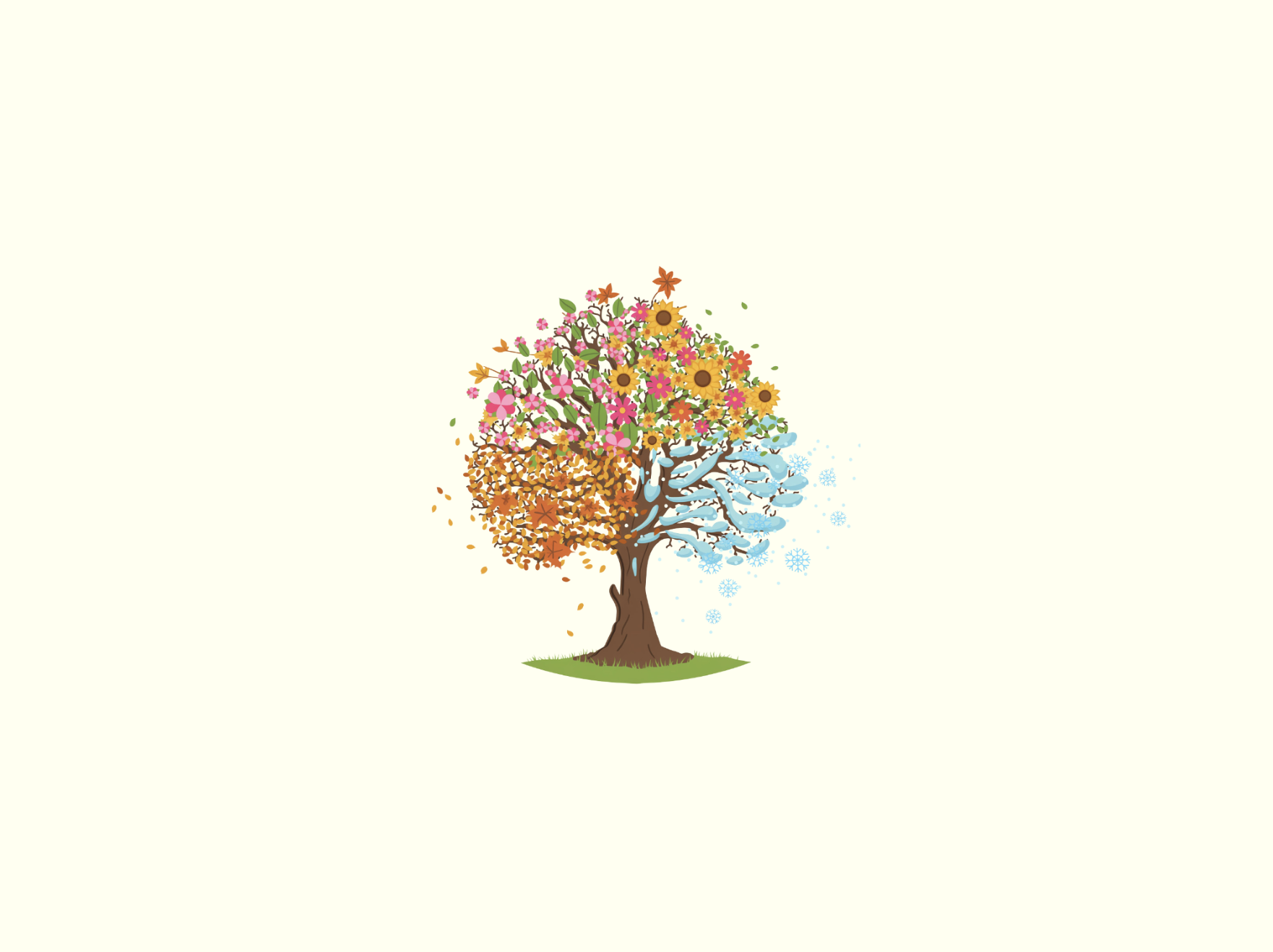
Trees don't fight the season they're in. They move with it. In spring, they push out new growth. In summer, they're in full leaf, soaking up long days of sun and warmth. In fall, they let go: the leaves change colour and drop, not as a failure but as a release. In winter, they go dormant. They pull their energy inward and trust that spring will come again.
You're in a season too. It might not be the one you assumed.
Spring is reaching out. It's putting your name in for a job you're not sure you'll get, starting a friendship from scratch, letting a new idea take shape. Summer is full bloom. You're present with your people, deep in your hobbies, enjoying the fruit of the labour you put in back in spring. Fall is letting go. A friendship has run its course, or a hobby doesn't fit your capacity anymore, and you set it down, not as a failure but as a release. Winter is pulling inward. There's simply less to give right now, and that's not a failure either. It's dormancy.
Most of the extra weight people carry doesn't come from the season itself. It comes from expecting spring's energy while standing in fall, or expecting summer's fullness while in winter. A tree never makes that mistake. It doesn't try to bloom in November. It doesn't apologize for going dormant in January. It simply knows what season it's in, and it trusts that knowing completely.
Recognizing which season you're actually in, and adjusting your expectations to match it instead of fighting it, tends to lower the pressure more than pushing through ever does.
What season are you in right now? Reaching out, in full bloom, letting go, or pulling inward?
A Final Thought
The transitions themselves can still be hard. It's still painful. Moving away from a home you loved, missing friends and family, starting over somewhere new, none of that stops hurting just because you understand it. But being flexible enough to bend without breaking, staying rooted in who you are, building a network wherever you land, and accepting the season you're in all increase your resilience. That resilience isn't fixed. It's adaptable, built piece by piece out of things you already have more access to than you think.
P.S. If this resonated, we're hosting a resilience workshop at the end of September that goes further into building your own personal resilience model. We'd love to see you there!
References
Copley, L. (2025, August 22). Resilience theory: Core concepts & research insights. PositivePsychology.com.
Mayo Clinic. (n.d.). Resilience: Build skills to endure hardship. https://www.mayoclinic.org/tests-procedures/resilience-training/in-depth/resilience/art-20046311
McLarnon, M. J. W., Rothstein, M. G., & King, G. (2021). Resiliency to adversity in military personnel: The role of self-regulation. Military Psychology, 33(2), 104–114.
Sisto, A., Vicinanza, F., Campanozzi, L. L., Ricci, G., Tartaglini, D., & Tambone, V. (2019). Towards a transversal definition of psychological resilience: A literature review. Medicina, 55(11), 745.